
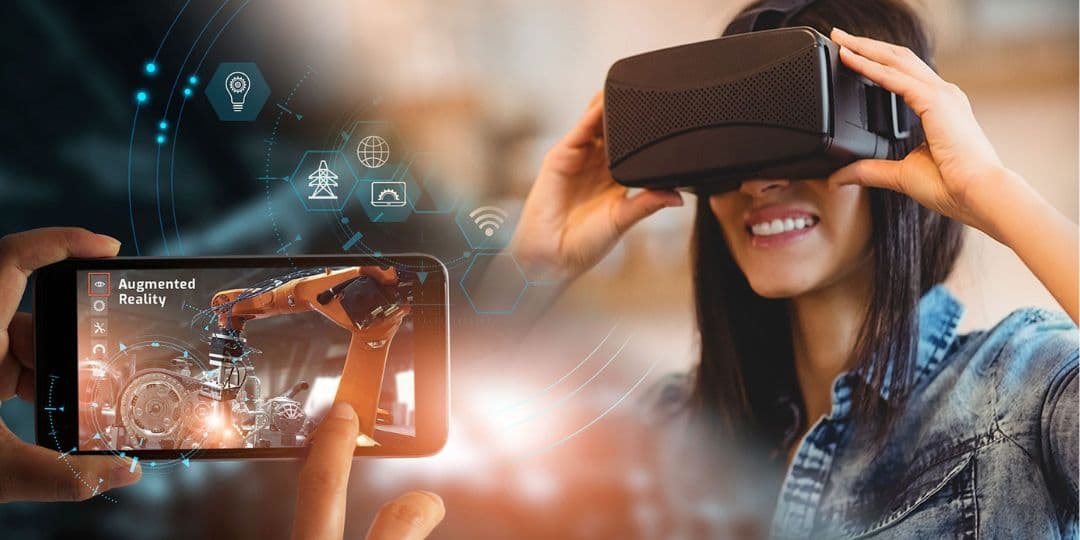
If you’re getting into immersive tech or even just exploring it for business, one question comes up almost immediately. AR or VR? And honestly, it’s not as straightforward as people make it sound. On paper, both look exciting. Both seem powerful. But when you actually sit down to build something, things get a bit tricky. This is where a lot of developers and even businesses get stuck. Choosing between AR and VR is not just about preference.
It affects cost, user experience, scalability, everything. That’s why both virtual reality development companies and any augmented reality app development company spend a lot of time figuring this out before starting a project. It’s less about which one is better. More about which one makes sense.
Understanding the Core Difference First
Before comparing anything, it helps to just get the basics clear. AR and VR are often mentioned together, but they work very differently. Augmented reality adds digital elements into your real world. You’re still in your environment, just with extra layers on top. Virtual reality, on the other hand, replaces your environment completely. You’re inside a different world.
A VR app development company focuses on building fully immersive environments. Meanwhile, an augmented reality app development company works on blending digital with real. That one difference changes everything in terms of development. And that’s exactly why AR/VR app development services are usually offered separately or with very different approaches.
Why This Choice Feels Like a Dilemma
Now here’s where it gets interesting. From a developer’s point of view, both AR and VR have their own pros and headaches. There’s no clear winner. You might think VR is more immersive, so go with that, but then you realize not everyone has a VR headset. You might think AR is more accessible, but then it comes with its own technical challenges. That’s why even experienced VR development companies and AR teams pause before deciding.
Some common things that create confusion:
- User accessibility vs immersion
- Development cost vs experience quality
- Hardware limitations
- Performance issues across devices
- Long-term scalability
This is where the real dilemma starts for developers working in AR/VR app development services.
When AR Makes More Sense
There are situations where AR just fits better, not because it’s better overall, but because it’s more practical. AR works directly on smartphones, which means users don’t need extra hardware. That alone makes a big difference. Most businesses that want quick adoption usually lean toward AR first. An augmented reality app development company often recommends AR when the goal is to reach more users quickly.
Here’s where AR usually works well:
- Retail and e-commerce experiences
- Product visualization
- Marketing campaigns
- Basic training or guidance apps
- Social media integrations
From a development perspective, AR feels more flexible in these cases.
But that doesn’t mean it’s easier. It just solves a different kind of problem.
When VR Is the Better Option
Now VR is a different story. It’s not as accessible as AR, but when it works, it works really well. If the goal is full immersion, VR is hard to beat. A VR app development company usually suggests VR for use cases where the environment itself matters more than convenience. Before listing it out, think about it this way. If removing the real world improves the experience, VR is probably the right choice.
Here’s where VR fits better:
- Simulation and training environments
- Gaming and entertainment
- Virtual tours and walkthroughs
- Complex learning scenarios
- Controlled environment experiences
This is why many virtual reality development companies focus heavily on industries like training and simulation.
Because that’s where VR actually shines.
Development Complexity Is Not the Same
This is something people often underestimate. Building AR and VR apps is very different behind the scenes. Both come under AR/VR app development services, but the actual work involved is not the same at all. With AR, you’re dealing with real-world tracking, lighting, surfaces, and device compatibility. Things can break easily if not handled well. With VR, you’re building everything from scratch: the environment, interactions, movement, everything.
From a developer’s perspective:
- AR requires strong real-world mapping and tracking
- VR requires full environment creation
- AR depends heavily on device sensors
- VR depends more on rendering and performance
- Both need good UX design, but in different ways
That’s why both VR development companies and AR teams specialize differently.
Cost and Time Considerations
Budget matters. This is another area where developers and businesses have to think carefully. AR projects can sometimes be quicker to launch, especially if they are simple and mobile-based. VR projects usually take more time because everything needs to be built from scratch. A VR app development company often deals with longer timelines compared to an augmented reality app development company.
Some general differences:
- AR can be more cost-effective for simple apps
- VR can get expensive depending on complexity
- AR has wider reach due to mobile access
- VR may need hardware investment
- Maintenance cost varies for both
This is why many virtual reality development companies suggest starting small before scaling.
User Experience Feels Very Different
At the end of the day, everything comes down to the user. How it feels to use the app matters more than anything. AR feels lighter. You’re still aware of your surroundings. It doesn’t require full attention. VR is more intense. It pulls you completely into a different space. A good AR/VR app development services provider always thinks from the user’s point of view first.
Because even the best tech fails if the experience feels uncomfortable.
- AR is easier for casual use
- VR is better for deep engagement
- AR works well for quick interactions
- VR is better for focused sessions
That’s why choosing between an augmented reality app development company and a VR app development company depends a lot on the experience you want to create.
Why Many Businesses Are Using Both
Here’s the thing. It’s not always AR vs VR. Sometimes it’s AR and VR. A lot of companies are now combining both depending on the use case. That’s where full AR/VR app development services come in. For example, a brand might use AR for marketing and VR for training. Different tools for different purposes.
Many virtual reality development companies are now expanding into AR as well, and vice versa. Because sticking to just one limits opportunities. And honestly, it makes sense to stay flexible.
So What Should Developers Choose?
This is the question that keeps coming up. And the honest answer is, it depends. Not the most satisfying answer, but it’s the real one.
Developers working in AR/VR app development services usually look at the problem first, not the technology.
- What is the goal of the app
- Who is going to use it
- What devices they have
- How immersive it needs to be
- What the budget looks like
Based on that, they decide whether to go with AR or VR.
A good VR app development company or augmented reality app development company won’t push one over the other blindly.
They’ll pick what fits.
Final Thoughts
The whole AR vs VR debate sounds bigger than it actually is. In reality, both have their place. AR is more accessible and easier to adopt. VR is more immersive and powerful in the right scenarios. That’s why both VR development companies and AR-focused teams continue to grow. If you’re a developer or a business trying to decide, don’t overthink it. Focus on what you’re trying to build. The right choice usually becomes obvious once you’re clear on that.
And if not, that’s where experienced AR/VR app development services providers come in. They help you figure it out without making it complicated. Simple approach, clear goal, and the right tech. That’s all it really comes down to.